 I was riding in a taxi in Washington, DC talking with my companion about morality and moral dilemma when the taxi driver interrupted:
Moral dilemma? I'll tell you about a moral dilemma that the City of Washington, DC is putting me through right this moment.Now that's a moral dilemma.
I make my basic living as a taxi driver. But during the day, when things are slow, I supplement my income by taking patients to get their dialysis treatments. The City pays as part of it's program to assist poor people get needed medical care.
So here's the dilemma I'm in. I need the extra money. The people need to get to the care centers. But the City hasn't paid me in five months! That's right... five months. It's not a billing discrepancy. Everyone agrees that I'm supposed to get the money. They just don't have the money to pay us.
So what am I to do? Stop picking up and delivering patients who need my service to get their medical help?
Problems like that haven't gone away. A recent Washington Post editorial exposed very similar circumstances: promises made, good intentions put into governmental programs, and no (or slow) actions or funding. Think Katrina.
Or think about all the other major problems that could be remedied with foresight and preventative investments which I like to think of as strategic investments [an investment now into remedying a social problem to save a larger amount at a later date. Think Head Start programs. In venture capital terminology, strategic investors are distinguished from venture capitalists and others who invest primarily with the aim of generating a large return on their investment.]
- Alzheimer's will shortly become our biggest and costliest killer. The medical costs for a patient are phenomenally high as they become more and more incapacitated. As baby boomers age and other diseases find cures, Alzheimer's is moving quickly up the ladder to the number one spot. The numbers and costs are against us and NIH knows this as does every major health organization -- yet funding for Alzheimer's research is still meager and disorganized. There's no reason why a strategic investment today won't reap cost-saving benefits in the future. Yet... it's not happening.
- Mental health is another serious concern. In Congress they're talking about "parity" which is a spin word to defuse the issue. [Disparity between full medical coverage versus limited mental health coverage (if any).] Yet today's military can't cope with their present load (as evidenced by recent articles about an APA Task Force studying the subject). Returning Vets from Iraq and Afghanistan's have mental health issues AND head injuries that are causing VA costs to skyrocket out of budget with future years even worse. As life becomes more complex and people live longer, mental health issues become more prevalent. Yet they are still treated primitively when it comes to insurance coverage. Limited treatments, if any, may alleviate pain temporarily, but don't provide life-changing help. Other than cost, there's no reason why a strategic investment here won't reap long-term benefits. Yet... it's not happening.
- Educational changes are also strategic investments. Educating doesn't just happen in schools. Think Surgeon General Koop's condom and anti-smoking messages. Complexity, ethnic diversity, religious tolerance, compassion, and developing an understanding that we're all the same AND in the same boat are teachable and could have significant cost savings (think no wars).
- Treating addictions as a mental health issue through early education and exposure to and emancipation from the underlying causes is another cost-saver.
We all know that government is innefficient. Ours is. But this is an area that they (we) are charged to provide. Let's get the new Congress and the next administration to do their job - particularly in the area of strategic investing.


 For 25 years I was in the same business as Rove but never went as far as him in the splitting process because part of his process was to also use his information as a wedge to widen the divisiveness and inflame the fears of that split rather than try to unite around some issue or candidate that could help provide a real solution.


 From now until February 1st, 2007 we're in a funny state of limbo. Remember the line from your service days that went "Hurry Up and Wait (Huaw)?" Well it's true today as we wait for the new 110th Congress to come online, elect new speakers, pick committees, and actually go to work and do something.
 Republican get-out-the-vote (GOTV) programs are set and ready to roll. They track people who've been identifed as saying they intend to vote right up until they actually do vote. If they vote early or absentee, they are purged so that the resulting target list is up-to-date and refined. Democrats have a similar capability but not a system for doing it everywhere; they do it where and if they have the money. The result is that the Reps get some votes that would otherwise fall through the cracks. And this election cycle, many Reps are seriously considering not voting, thus this GOTV program will get many of them back in the fold.
 Time Magazine asked whether Limbaugh was good for America and the answer seems to be "No." Especially as he has stretched our tolerance and amusement levels with his caustic and slimeball remarks about Michael J. Fox, the feeling de jure seems to be less noise; more brotherhood.
 The only breath of fresh air in Congress today is Nancy Pelosi's statement about not tolerating impeachment diversions but instead, focusing on a progressive agenda of very necessary action items should the Dems win the House and she gets the leadership post (Reid has said that he intends to pass it on to her). This truly has been our worst and most unproductive Congress. A recent mass e-mailer making the rounds shows that although Congress has been lackluster in terms of passing laws, they have been wonderful at breaking them!
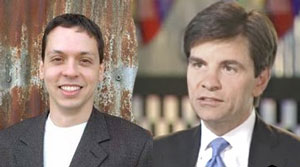 When George Stephanopoulos was in the White House I admired him greatly for sticking to his guns. But in his recent interview with President Bush on Sunday's ABC This Week, he didn't blink an eye when Bush lied. But Kos came to the rescue with his Monday blog "Stay the course"? Whoever said such a thing?


